Cambodia cuisine, especially street food is one thing that you can not miss. However, it is advised to enjoy at caution since your digestion system might not be able to handle all the strange new herbs and spices.
Cambodia food is famous for its rice and fishes. Average meal consists of more than one dish and ideally contrasts flavors, textures and temperatures within the meal using plenty of herbs, leaves, pickled vegetables, dipping sauces, edible flowers and other garnishes and condiments.
Here are just a few examples of the fantastic dishes you can expect to find in Cambodia:
Fish amok: a fish mousse with fresh coconut milk and kroeung, a type of Khmer curry paste made from lemongrass, turmeric root, garlic, shallots.
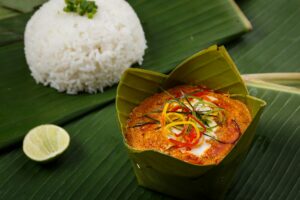
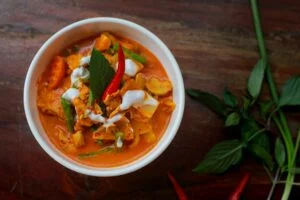
Khmer red curry: beef, chicken or fish, eggplant, green beans, potatoes, fresh coconut milk, lemongrass and kroeung.
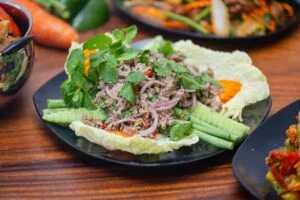
Lap Khmer: beef salad features thinly sliced beef that is either quickly seared or “cooked” ceviche-style by marinating with lime juice.
Nom Bang Chok: a typical breakfast food, noodles laboriously pounded out of rice, topped with a fish-based green curry gravy made from lemongrass, turmeric root and kaffir lime.
Bai Sai Chrouk: rice dish with pork slices marinated in coconut milk or garlic slowly grilled over charcoal.
Red tree ants with beef and holy basil: rice dish with stir-fried red tree ants with beef and holy basil.
Cha Houy Teuk: a sweet jelly dessert made with agar agar, a gelatin that is derived from seaweed
Needless to say, Cambodia – as a tropical country – has a wealth of fresh fruits on daily offer. When you go to a local market you will be astounded by the beautiful colors and aromas, and – sometimes – the somewhat strange shape of the fruits. You can also let fruits mix into a smoothie, locally known as touk kolok. The country’s tropical fruits keep a court of their own; with the durian a revered king and the mangosteen an honored queen. To complete the royal fruit family, the lemut should be named prince and milk fruit bestowed the honor of princess.